We work with most major dental insurance providers and handle billing on your behalf, just like a traditional dentist's office, but with a modern, stress-free approach.
From the moment you book your visit, our team makes it easy to understand what's covered and what to expect. Whether you're coming in for a routine cleaning, a cosmetic treatment, or something in between, we'll help you make the most of your benefits.
And if you're unsure about your plan, we're happy to check your coverage and walk you through your options—no surprises, no confusion, just great care.

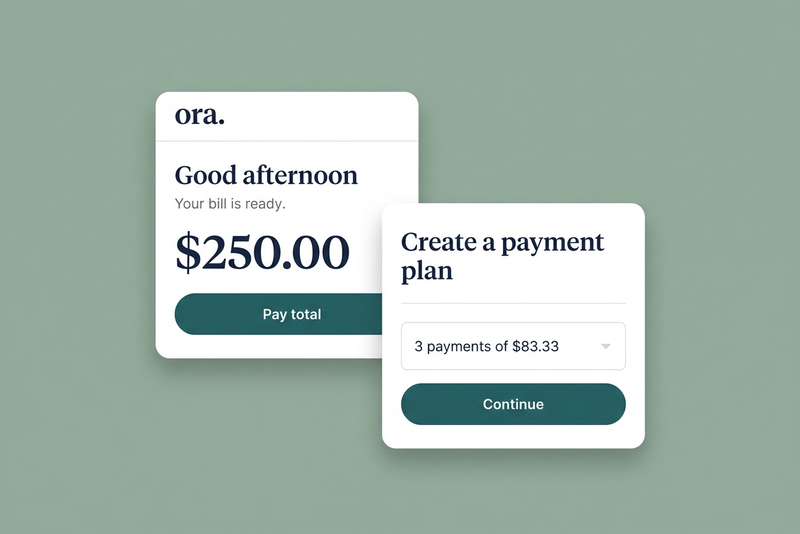
Curious if insurance will cover your exam? We can tell you in just a few seconds.
Unfortunately, there are some dental insurance plans we don't accept, including Medicaid, Medicare Advantage, Healthplex, HMOs, DMOs, and others. If we don't take yours, we'll contact you ahead of your visit.
We believe in transparency. Sometimes, your final bill may differ from your initial quote. You may even carry a balance, despite insurance coverage.
There are several reasons for this. Insurance plans don't always offer full coverage, which means co-pays and deductibles may still apply. Additionally, if your plan has changed or if your insurer has updated its coverage, you may have a balance due.
Learn more*We include a range because final cost can vary based on your location and the complexity of the treatment your dentist recommends.
| Service | Cost |
|---|---|
| First Dental Exam | $375 |
| Filling | $113–$420* |
| Periodontal Non-Surgical Treatment | $175–$298* |
| Emergency Exam | $215 |
Our team is happy to help.
You can always check with your insurance company to find out what they are and how much they cover. However, the Ora insurance team can check for you and give you an exact breakdown. All we need is your carrier name and subscriber ID.
In many instances, out-of-network benefits cover preventative services at 100%. Your exams and cleanings are considered preventive by Ora and your insurance. Give us your info and we'll tell you exactly what is covered and how much you'll owe.
Being out of network simply means Ora does not have a direct contract with your insurance provider. It does not mean we don't take your insurance—we take all insurances except DHMOs, Medicaid, Healthplex, and Emblem. For carriers we have a direct contract with, they have negotiated prices. When out of network, we use the base price for the service and apply the coverage percentages that correspond to your out-of-network benefits to calculate what you'll owe.
The basic premise of dental insurance is the same as other employer-provided insurance such as medical and vision. Most dental insurance is provided by your employer, has monthly premiums, and has guidelines on who you can see and what benefits are provided. The major difference is that dental insurance has a yearly maximum reimbursement, whereas medical insurance covers reimbursement after you reach your own out-of-pocket maximum.
Dental insurance works similarly to medical insurance, with the main difference being that the insurance provider is responsible for "first money out," meaning they cover up to a "maximum allowable" amount in a given benefit period (usually a year), and the patient is responsible for any amount over that limit. As with medical co-insurance, dental PPO plans typically cover services based on categories: Preventive, Basic, and Major—most PPO coverages provide 100% coverage for Preventive services, 80% on Basic, and 50% for Major. This breakout is plan-specific, so consult your personal benefits to understand your coverage.
Typically, dental insurance covers all types of dental care ranging from exams and cleanings (typically twice a year), basic dental care (fillings, crowns, etc.) to oral surgery and orthodontics. Insurers categorize each type of care into Preventive, Basic, and Major services, each covered at a determined percentage (typical breakouts are 100% / 80% / 50%), leaving the remaining balance to the patient. Orthodontics are unique, typically with rules around age and lifetime vs. annual maximums.
A PPO is a "Preferred Provider Organization." PPOs do not require you to choose a primary dentist, although one is recommended, and you don't need referrals to see a specialist—though you'll save money seeing one in your plan's network. This differs from DHMO insurance plans, which typically cover dental services at a low cost with minimal or no copayments through a pre-selected primary care dentist. DHMO members are required to select a primary dentist and are restricted to that dentist unless referred to a specialist.
In most cases, two exams and cleanings in a calendar year.
$375.
In most cases, yes. However, there are exceptions and rules that are important to know prior to your visit. For instance, an implant would not be covered if you were previously missing your tooth and your coverage includes a "Missing Tooth Clause." At Ora, we can help you determine which rules are in place for your specific coverage.
In most cases, yes. Orthodontics are unique and typically have rules around age, who on your plan is allowed to use it, and how much is offered (i.e., a lifetime max versus an annual amount). At Ora, we can tell you what rules are in place for your specific coverage.